
Telephone Triage. Virtual Care Coordination.
Telehealth clinical symptom assessment and patient advocacy.
Active Telephone Triage Positions (10)
Perform rapid inbound symptom triage using standardized Schmitt-Thompson clinical algorithms. Direct callers to emergency, urgent, or home care.
Dedicated evening triage for pediatric parent helplines (5:00 PM - 1:30 AM EST). High shift differential and acute symptom protocol support.
Inbound clinical helpline triage for employer health plans. Provide instant telephonic advice, medication interaction checks, and provider referrals.
Conduct telephonic triage and schedule same-day virtual urgent visits with Kaiser Permanente primary care physicians and specialists.
100% asynchronous clinical message routing. Review incoming patient portal inquiries, lab result notifications, and medication renewal requests.
Select your weekend shifts (12 to 24 hrs/wk). Provide triage coverage for regional health plans using standardized clinical triage protocols.
Provide immediate clinical de-escalation, suicide risk assessment, and acute psychiatric triage for callers in emotional crisis.
Audit automated high-risk biometric alerts from connected glucose meters, pulse oximeters, and cardiac wearables. Reach out to at-risk patients.
First-report-of-injury phone triage for corporate workplaces. Provide immediate first-aid guidance and direct injured workers to occupational clinics.
Provide fluent Spanish/English telephone triage services to diverse Medicaid populations. Differential pay applied for certified bilingual proficiency.
The Art and Science of Non-Visual Clinical Assessment
Remote triage nurse jobs are licensed clinical telecommuting roles where Registered Nurses conduct telephonic symptom assessments, prioritize clinical urgency, and direct callers to appropriate levels of care using evidence-based Schmitt-Thompson protocols. Operating for health systems, poison control centers, or virtual care providers, telephone triage RNs earn $78,000–$104,000/yr ($37–$50/hr), requiring 2 to 3 years of acute emergency or ambulatory triage experience.
Telephone triage represents one of the most intellectually demanding specialties in registered nursing practice. In traditional inpatient or emergency care, a nurse assesses patient status using multimodal sensory inputs: observing skin pallor, listening to lung sounds, palpating abdominal rigidity, and viewing real-time hemodynamic monitors.
In telephone triage, the nurse must conduct an equally rigorous clinical assessment using solely auditory information. The triage RN evaluates speech patterns, respiratory cadence between words, background environmental sounds, and emotional distress levels to identify subtle red flags—such as early anaphylaxis, intracranial hemorrhage, or silent myocardial ischemia.
The Schmitt-Thompson Decision Support Framework
To eliminate diagnostic guesswork and ensure standardized clinical safety, telephone triage is anchored by the Schmitt-Thompson Clinical Triage Protocols. Co-developed by Dr. Barton Schmitt (pediatric guidelines) and Dr. David Thompson (adult guidelines), this comprehensive protocol library covers over 800 discrete chief complaints.
When a caller describes sudden severe headache, the nurse navigates an algorithmic hierarchy of exclusionary questions—ruling out "worst headache of life" (subarachnoid hemorrhage), fever with neck stiffness (meningitis), and focal neurological deficits (ischemic stroke) before considering tension headache home management. Strict adherence to these validated pathways provides essential legal liability protection for the practicing clinician.
Dispositions: Matching Clinical Urgency with Healthcare Resources
The primary output of every telephone triage interaction is a definitive clinical disposition. Unlike diagnostic medical decisions, dispositions determine where and how quickly the patient must seek evaluation:
1. Immediate 911 Activation: Suspected life-threatening emergencies requiring EMS transport.
2. Emergency Department (within 2–4 hours): High-risk presentations requiring immediate facility diagnostics.
3. Urgent Care Center (within 12–24 hours): Moderate-acuity concerns needing same-day provider intervention.
4. Primary Care Follow-up (within 3–5 days): Non-acute routine symptom evaluation.
5. Home Care & Re-triage Instructions: Evidence-based symptomatic relief and worsening warning signs.
Telephony Ergonomics, HIPAA Security, and Call Documentation
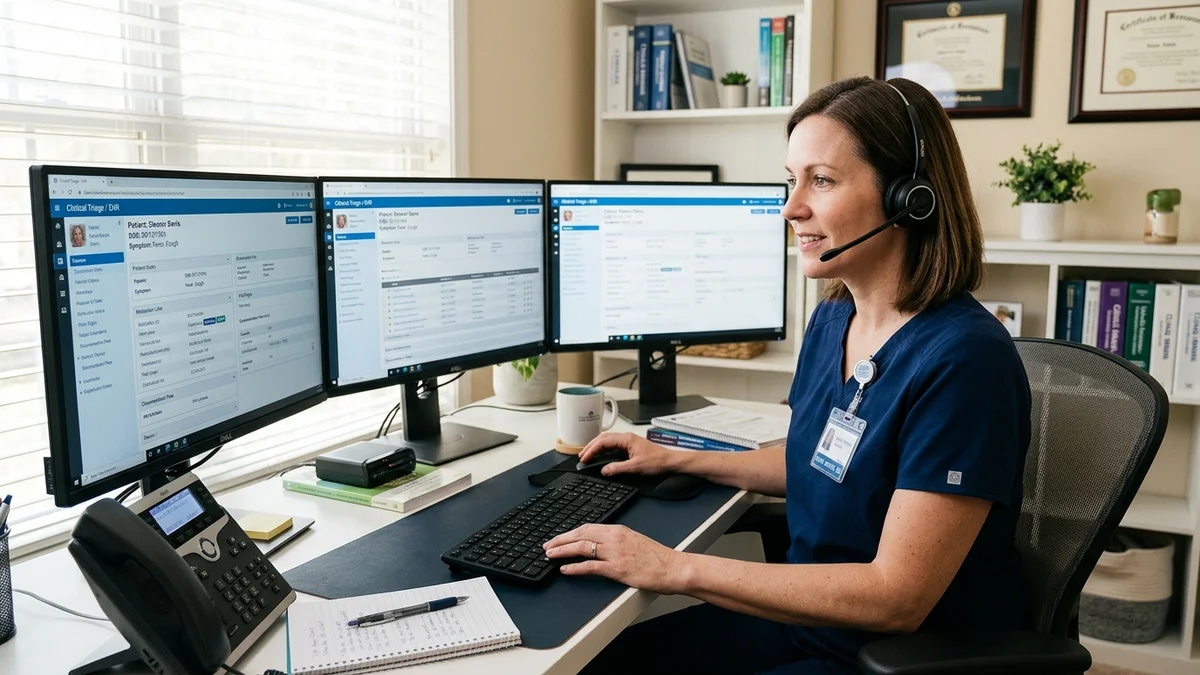
Working as a remote triage nurse requires an ergonomic and acoustically controlled environment. Because calls are recorded for quality assurance and regulatory compliance under state telehealth statutes, home workstations must be situated in a private room free from family members, pets, or outdoor noise.
Triage RNs utilize dual monitors—displaying the EHR call interface on one screen and the active Schmitt-Thompson protocol window on the other. Enterprise noise-cancelling headsets with hardware mute buttons and synchronized VoIP telephony allow nurses to maintain focus across back-to-back clinical encounters.
📥 Download the 2026 Remote RN Resume & ATS Keyword Checklist
Includes essential telephone triage keywords and EHR documentation standards to showcase on your corporate resume.
Download Checklist (Print / PDF) →Frequently Asked Questions About Remote Triage Nursing
01 What protocols do remote telephone triage nurses use during patient calls?
Virtually all accredited American telephone triage services utilize the Schmitt-Thompson Clinical Triage Protocols (authored by Dr. Barton Schmitt and Dr. David Thompson). These protocols provide algorithmic decision trees across adult and pediatric chief complaints, categorizing clinical urgency into immediate 911 dispatch, emergency department evaluation within 2 to 4 hours, urgent care, next-day office visit, or home self-care instructions.
02 Is telephone triage legally considered the practice of medicine?
No. Telephone triage is legally defined as nursing assessment and clinical disposition recommendation. Registered nurses do not provide medical diagnoses or prescribe pharmacological treatments over the phone; instead, they assess symptom severity and direct callers to the appropriate level of licensed medical care under established clinical protocols.
03 What acute clinical experience is required for telehealth triage roles?
Emergency Department (ED), Intensive Care (ICU), Urgent Care, or Ambulatory Clinic triage experience is highly sought after by telehealth employers. Autonomous assessment intuition—the ability to identify subtle respiratory distress, neurological changes, or atypical cardiac presentations without physical palpation—is essential.
04 What are the hardware and telephone setup requirements for remote triage?
Employers provide secure VoIP telephony software integrated with EHR platforms (such as ClearTriage or Epic). Triage nurses must have a dedicated, hardwired Cat6 high-speed internet connection (minimum 50 Mbps download / 15 Mbps upload) and use enterprise dual-ear noise-cancelling headsets to maintain absolute voice clarity.
05 What salary and shift flexibility can I expect in remote telephone triage?
Remote telephone triage RNs earn between $78,000 and $104,000 annually ($37.00 to $50.00 per hour). Because patient symptom concerns peak during evenings, weekends, and holidays, triage organizations offer exceptional shift variety, including 4x10 evening schedules, weekend PRN rotations, and overnight shifts with premium hourly differentials.